Cannery Row
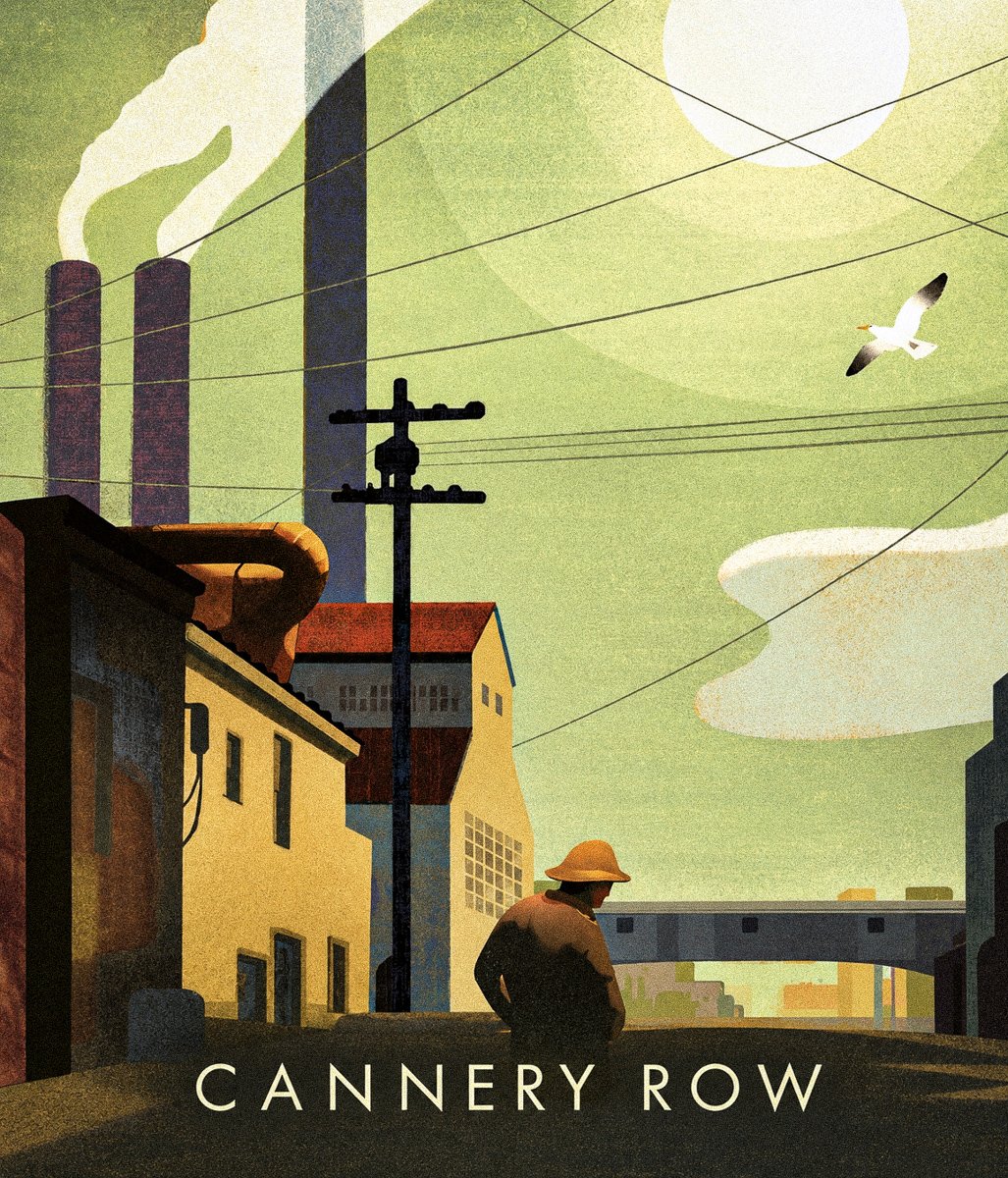
“It is the hour of pearl — the interval between day and night when time stops and examines itself.”
- John Steinbeck, Cannery Row
___
Some novels are driven by plot. Others by characters, ideas, or the worlds they create. Cannery Row is something different. It is a novel built around a place and the collection of people who call it home.
First published in 1945, John Steinbeck’s Cannery Row takes us to Monterey, California, during the years following the Great Depression. The sardine canneries line the waterfront, fishing boats work the bay, and beyond the factories and warehouses lives a community of shopkeepers, laborers, prostitutes, scientists, drifters, and people simply trying to get by.
At the center of that community is Doc, a marine biologist who operates Western Biological Laboratory and spends his days collecting specimens along the California coast. Around him gathers an unlikely collection of characters. There is Lee Chong, the local grocer who seems to sell almost anything; Dora Flood, who runs the Bear Flag Restaurant; and Mack and the boys, a group of generally unemployed men living together in an abandoned fish-meal storage building they call the Palace Flophouse and Grill.
There is a story running through Cannery Row, but Steinbeck never seems particularly concerned with getting anywhere quickly. Much of the novel simply observes these people as they live, scheme, argue, celebrate, fail, and occasionally stumble into moments of unexpected kindness.
Mack and the boys eventually decide they want to do something nice for Doc. Their plan is simple enough: throw him a party. As might be expected from Mack and the boys, good intentions and good planning are not necessarily the same thing.
What follows is funny, melancholy, compassionate, and deeply human.
That humanity is what has always stayed with me about Cannery Row. Steinbeck writes about people living along the edges without treating them as objects of pity. They are flawed, sometimes irresponsible, occasionally ridiculous, and often surprisingly generous. There is poverty here, loneliness, and disappointment, but there is also friendship, humor, dignity, and a strong sense of community.
The place itself is just as important.
Steinbeck’s Monterey is not the polished tourist destination many people know today. It is an industrial waterfront of corrugated metal, weathered buildings, vacant lots, tide pools, laboratories, bars, restaurants, and the smell of fish hanging over everything. Yet Steinbeck finds beauty within it. The natural world of Monterey Bay exists alongside the machinery of the canneries, and the boundary between the two never feels very far away.
Perhaps that is one reason the novel has always felt particularly personal to me.
I first visited Monterey and the central California coast in the winter of 1992. It was my first trip to California, and I fell in love with the area almost immediately. Monterey, Pacific Grove, Carmel, and the coastline stretching south toward Big Sur became one of those places that remained with me long after I returned home.
The Cannery Row I walked was obviously not Steinbeck’s Cannery Row of the 1930s and 1940s. The sardine industry was long gone, and the waterfront had been transformed. But the geography remained. Monterey Bay was still there. So were the rocky shoreline, the tide pools, the changing Pacific light, and those moments late in the day when the coast seemed to exist somewhere between land, sea, and sky.
Steinbeck called one of those moments “the hour of pearl.”
Having stood along that coast and watched the light change over Monterey Bay, I understand exactly why.
That personal connection may be part of my affection for Cannery Row, but the novel hardly needs it. Steinbeck created something remarkably enduring from a few blocks of waterfront and a collection of people who might have gone unnoticed by almost anyone else. There are no great heroes here, no grand adventures, and very little that resembles a conventional quest.
Instead, there are people.
People trying to get through the day. People making mistakes. People looking after one another. People finding moments of happiness in lives that do not always give them much reason to expect it.
More than eighty years after it was published, Cannery Row still feels warm, funny, sad, and wonderfully alive. It is one of my favorite Steinbeck novels and one of those books I can return to simply because I enjoy spending time in the place he created.
___
Paper Trail: